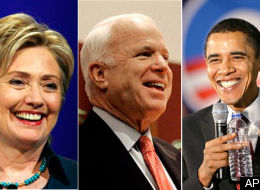
Today, Monday, one of the first dual party debates occurred between Obama and McCain. The topic of the debate centered on which candidate could relate more to the American public. The debate happened over a newspaper campaign.
Obama has been criticized by Americans for calling them out on their unhappiness with the economic status, calling them “bitter.” He claims that when workers struggle, they turn to guns and religion in order to alleviate their problems and consequently lash out at others who are better off. (Obama later tried to recant these harsh words, saying he himself is religiously observant and also a supporter of firearms.) While he is under fire, he criticizes the Republicans for not being sympathetic or caring enough about the economic situation to have the government help out. He claims that it only worsens the economic situation and also decreases public support. He attacked McCain for siding with President Bush in his tax cuts at the beginning of the decade and gave harsh words about him following Bush’s legacy too closely.
McCain takes a higher road in the debate, acknowledging Obamas comments and retaliating slightly less. He claims that Obama’s comments were of the elitist nature. McCain says that although he feels that government is important in people’s personal lives, the economic status is not the place for intervention and should assist as little as possible.
Clinton on the other hand, did not take part in the debate, but tried to turn Obama’s remarks back on him, calming that he would not be a President of the people because he is a snob.
The real question is, is this a precursor to future Presidential debates? Will it be Obama vs. McCain 2008, with the winner becoming President of the United States? If this debate shows anything, it will be a definite interesting campaign!
Monday, April 14, 2008

Sunday, April 13, 2008
Is the McCain campaign Constitutional?


As the race for the White House wages on, a little factoid often goes over looked. This is the fact that some may claim that the McCain candidacy is not Constitutional. The reason for this is that John McCain was not born in the Continental United States. McCain was actually born on a

It is also interesting to note that if this race is an Obama-McCain match up, it would make the first time that both major party candidates were not born in the continental United States as Barack Obama was born and raised in the state of Hawaii.
This reminds me of some of our lectures in class of Alexander Hamilton. While he may have wanted to run for president, many question whether he was eligible as he was born in the West Indies, which was not part of the colonies at the time of the Revolution.
Sites I received info from:
http://www.law.cornell.edu/constitution/constitution.articleii.html#section1
http://bioguide.congress.gov/scripts/biodisplay.pl?index=H000101
http://www.msnbc.msn.com/id/23841816/Saturday, April 12, 2008
candidate confidence


Political cartoons say a lot! These seem to sum up the elections we're looking at - the 2008 campaign and FDR's success.
Friday, April 11, 2008
Anything but this!

The Great Depression and the 1929 stock market crash were the major concerns of the 1932 election. According to Presidential Campaigns author, Paul F. Boller, Jr., “by 1932, millions of people were damning Hoover and the Republican Party” (p. 232), and the Democrats would have a certain victory. It wasn’t so much Franklin D. Roosevelt’s new policies were convincing to the public – in fact, the opposition tried to scare the public against them – it was more that the people were so discontent with the present situation that they were voting against what wasn’t working. The New Deal “was still rather vague in FDR’s mind” (p.236), but at that point, the public was desperate for change. Considering that people probably had a limited understanding of FDR’s programs and plans, their votes were against Hoover and the Republicans. In the 1932 election, FDR won 42 out of 48 states.
In 2008, Bushes approval rating has been in the low 30% range, with a previous low in July of 2007 of 29%, and a present low of 28% based on a Gallup Poll conducted between April 6th, and April 9th 2008. The American people are frustrated by the drawn out Iraq war, and the Democrats are using this opportunity to campaign for change. Both Clinton and Obama want to focus on how they are different than the president and how their policies would differ from the current administration. In the early Republican primaries, the candidates tried to distance themselves from Bush and each pointed out how they are/ would be different. Obama made his campaign based on the message of change, and this message successfully and quickly propelled him in popularity. He is picking up much of the Liberal and young vote who are likely the most discontent with the current administration.
American voter turnout has historically been low, despite the fact that Americans generally consider themselves to be politically involved. This has many factors, but it is important to note that there is a close relation between voter registration figures and election day voting. In the U.S., electoral participation is a two step process: a person must first register to vote before they may vote in an election. Although the general conditions on who can vote are uniform, states have their own registration process. States can have different deadlines for voter registration, however, in most states, a person must register at least 30 days before an election. Since low voter turnout is dependent on low voter registration, the federal government, as well as local governments, have addressed issues of voter registration. Two examples of federal laws to improve the voter registration process are: the National Voter Registration Act (1993) and the Help America Vote Act (2002). In 2004, the National Mail Voter Registration Form was handled by the newly formed Election Assistance Commission. Although it is very easy, many people are still not registered to vote. Social, political and religious groups have all made efforts to increase voter registration and, in turn, election day voting.
http://www.gallup.com/poll/106426/Bush-Job-Approval-28-Lowest-Adminstration.aspx
http://www.rockthevote.com/rtv_register_inc.php?ms=googlevr9
http://www.fec.gov/votregis/vr.shtml
http://declareyourself.com/index.php?option=com_content&task=view&id=14
In 2008, Bushes approval rating has been in the low 30% range, with a previous low in July of 2007 of 29%, and a present low of 28% based on a Gallup Poll conducted between April 6th, and April 9th 2008. The American people are frustrated by the drawn out Iraq war, and the Democrats are using this opportunity to campaign for change. Both Clinton and Obama want to focus on how they are different than the president and how their policies would differ from the current administration. In the early Republican primaries, the candidates tried to distance themselves from Bush and each pointed out how they are/ would be different. Obama made his campaign based on the message of change, and this message successfully and quickly propelled him in popularity. He is picking up much of the Liberal and young vote who are likely the most discontent with the current administration.
American voter turnout has historically been low, despite the fact that Americans generally consider themselves to be politically involved. This has many factors, but it is important to note that there is a close relation between voter registration figures and election day voting. In the U.S., electoral participation is a two step process: a person must first register to vote before they may vote in an election. Although the general conditions on who can vote are uniform, states have their own registration process. States can have different deadlines for voter registration, however, in most states, a person must register at least 30 days before an election. Since low voter turnout is dependent on low voter registration, the federal government, as well as local governments, have addressed issues of voter registration. Two examples of federal laws to improve the voter registration process are: the National Voter Registration Act (1993) and the Help America Vote Act (2002). In 2004, the National Mail Voter Registration Form was handled by the newly formed Election Assistance Commission. Although it is very easy, many people are still not registered to vote. Social, political and religious groups have all made efforts to increase voter registration and, in turn, election day voting.
http://www.gallup.com/poll/106426/Bush-Job-Approval-28-Lowest-Adminstration.aspx
http://www.rockthevote.com/rtv_register_inc.php?ms=googlevr9
http://www.fec.gov/votregis/vr.shtml
http://declareyourself.com/index.php?option=com_content&task=view&id=14
Wednesday, April 9, 2008
Cuz I like to party
The 1840 election was historical in that it marks the highest turn out of eligible voters voting. With over 80% voting its easy to assume that people of all ages were at the polls. At the same time, the election of 1840 was different in that it showcased heavy drinking and partying as hard cider became the staple in the election. The election was more about parade bbq’s and having fun than it was about the issues and people joined in, in record numbers. This election gave us the term “keep the ball rollin” as Harrison supporters would literally roll giants balls down the street, I would imagine that the hard cider played a role in the discovery of this pass time. I would also find it hard to believe that anyone over thirty years of age came up with the idea. In the end, the party that partied the hardiest won the election with a Whig and Harrison victory.
It has become rare in the current era for election turnout to reach much over 60% and with that America has seen a collectively apathetic attitude among young voters when it comes to elections. This year seems to be different, politico.com news reports that, “By recent historical standards, youth turnout is having a banner year. In every primary or caucus so far the youth turnout percentage has been the same or — almost always — greater than it was four or eight years ago.”http://www.politico.com/news/stories/0208/8418.html. Also, sites meant to rally the youth vote are popping up every where including Declareyourself.com, which in one article illustrates the youth attitude, “Nina Fuentes, 21, explained her draw to the presidential process: "They say young people are apathetic. Well, he's bringing us into the process. He's offering inspiration and hope that we can make a difference. . . . What I like is that his success is coming from grass roots, from the bottom up“." With the youth vote, comes the reintroduction of the party atmosphere into politics. I can’t find the article but I read on CNN that this primary season has broke the records for donuts given out, which is the best you can hope for since alcohol is no longer provided by the parties. Also, rallies around the country, particularly for Obama have seen enthusiastic crowds, including young Americans, that seem to be enjoying themselves more than usual.
Who knows whether the party-party which seems to be camp Obama at this point will actually win, or what influence the youth vote will have on who becomes our president. But if this election is anything like 1840 then we should see a big turnout among not only young Americans but all voters as a whole.
It has become rare in the current era for election turnout to reach much over 60% and with that America has seen a collectively apathetic attitude among young voters when it comes to elections. This year seems to be different, politico.com news reports that, “By recent historical standards, youth turnout is having a banner year. In every primary or caucus so far the youth turnout percentage has been the same or — almost always — greater than it was four or eight years ago.”http://www.politico.com/news/stories/0208/8418.html. Also, sites meant to rally the youth vote are popping up every where including Declareyourself.com, which in one article illustrates the youth attitude, “Nina Fuentes, 21, explained her draw to the presidential process: "They say young people are apathetic. Well, he's bringing us into the process. He's offering inspiration and hope that we can make a difference. . . . What I like is that his success is coming from grass roots, from the bottom up“." With the youth vote, comes the reintroduction of the party atmosphere into politics. I can’t find the article but I read on CNN that this primary season has broke the records for donuts given out, which is the best you can hope for since alcohol is no longer provided by the parties. Also, rallies around the country, particularly for Obama have seen enthusiastic crowds, including young Americans, that seem to be enjoying themselves more than usual.
Who knows whether the party-party which seems to be camp Obama at this point will actually win, or what influence the youth vote will have on who becomes our president. But if this election is anything like 1840 then we should see a big turnout among not only young Americans but all voters as a whole.
Tuesday, April 8, 2008
............Don't forget about those Congressional races!

While everyone this year keeps talking about the hot 2008 Presidential race, and whose going to win, there are many many more elections that are going on at the same time this Election Day. There are elections on town levels, state legislatures, governorships, U.S. Senate Seats and U.S. House seats. All of these are generally considered down ballot races, as the main election this year is the presidential election between McCain versus Obama or Clinton. But, it is extremely vital for each party to win seats in the U.S. Congress as a newly elected president needs members of his own party to have a majority to get his or her agenda through. With a divided government, it is really hard or even impossible for a President to get his or her agenda through Congress without having his or her party with a majority in Congress (A prime example of this it the bitter years we saw in the late 1990's with Bill Clinton, a Democrat, and the Republican controlled Congress. It was very hard for Clinton to get his agenda through Congress).
This year, for the 2008 election, the Democrats go into the election with majorities in the House and Senate. If Clinton or Obama were to win the White House, then they would need a Democratic controlled Congress to get their agenda through with as little changes to it as possible. If McCain wins, then he is hoping for the Republicans to take back Congress, so he can get his agenda through. As of right now, the prospects look really good for the Democrats to not only maintain their majorities, but to gain a significant amount of seats based on a number of reasons. One reason is the number of open seats in each house there are that were once held by Republicans. There are 6 open seats in the Senate and over 20 seats in the House. Also, the heads (Chuck Schumer (NY) for the Senate, Chris Van Hollen (MD) for the House) of the Democratic Congressional and Senate Campaign Committee (which are responsible for electing Democrats to the each body of Congress respectively) has a much more cash on hand to spend for Congressional races then the Republican Campaign Committees have on hand. The exact number is about $30 million for the Democrats and $3 million for the Republicans. This means the Democrats will be able to spend much more money on seats that could be vulnerable and the Republicans would be struggling to just play defense in some seats that are vulnerable. All in all, the Congressional races are very important to who ever wins the presidency as to get their agenda through Congress.
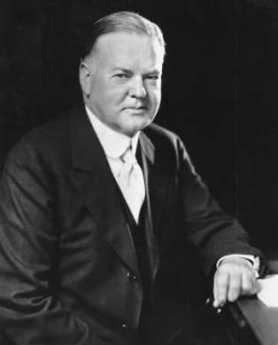
The implications of the Congressional races and the Presidential election of this year reminds me of numerous elections in the past. One such race was back in 1800, when Jefferson and the Republicans beat the Federalists in the presidential and Congressional races. As a result, Jefferson was more easily able to get his agenda through the Congress then if the Federalists were the party in power in Congress. Another election is the 1928 election, when Hoover and the Republican party swept into power with sweeping victories in the House and Presidency. As a result, these important Congressional races paved the way for these presidents to more easily get their agenda passed through Congress. This could be the case this year, depending on which party wins the Presidency and Congress respectively.
Websites that I obtained the information from:
http://firstread.msnbc.msn.com/archive/2008/04/08/870099.aspx
http://www.electoral-vote.com/evp2008/Comparison/Maps/Apr06.html
http://politicalticker.blogs.cnn.com/2008/04/08/dccc-chair-warns-negative-presidential-race-could-do-damage/
Monday, April 7, 2008
Wedge Issues 1800 and 2008 (Group B post 7)


Political Issues which divide campaigns are most commonly known as Wedge Issues. Wedge Issues most often occur within one political party (resulting in party divisions) but in rare cases they can signify an issue difference between two opposing parties. In the election of 1800 the wedge Issue seemed to be Slavery. The Slavery issue in 1800 divided the Republican Party, in that it pitted Republican leaders like Thomas Jefferson (who believed that a little Rebellion was good every once and a while) against Republicans who believed that the rightful order of the land must be preserved and slave uprising like Gabriel Prosser’s must be squashed. Another Wedge Issue in 1800 occurred on the part of the Federalist Party. A portion of the Federalist Party in 1800 wanted to go war with France, for a variety of reasons, but their Federalist leader at the time President John Adams was adamantly opposed to any war with France. This Wedge Issue of war pitted (coupled with other things) Federalist leaders like John Adams against Federalist Leaders like Alexander Hamilton. In 2008 parallels can be drawn as far as party divisions based on wedge issues. The wedge issue in 2008 for the Republican Party seems to be Immigration. During the primary stages of the campaign (where there were several candidates vying for the nomination) candidates like Rudy Giuliani advocated for bans against drivers licenses for illegal immigrates, http://blogs.trb.com/news/politics/blog/2007/11/immigration_the_wedge_issue_of.htmlwhere John McCain advocates for temporary worker Programs http://www.upi.com/NewsTrack/Top_News/2007/12/02/mccain_immigration_views_have_hurt_him/8174/. Wedge Issues can be found across party lines as well with the Democrats advocating for a troop withdraw from Iraq, and a majority of Republican’s advocating a “maintain the course attitude”. As previously mentioned wedge issues have divided political campaigns for over 200 years, and will continue to do so for the next 200.
Subscribe to:
Posts (Atom)